What is getting in the way of play?
A baby who always looks one way. A child who wants to ride with friends but cannot quite get going. Start with the moment you notice. Michelle works with families from the newborn years through to age 20.
Discuss your child’s movement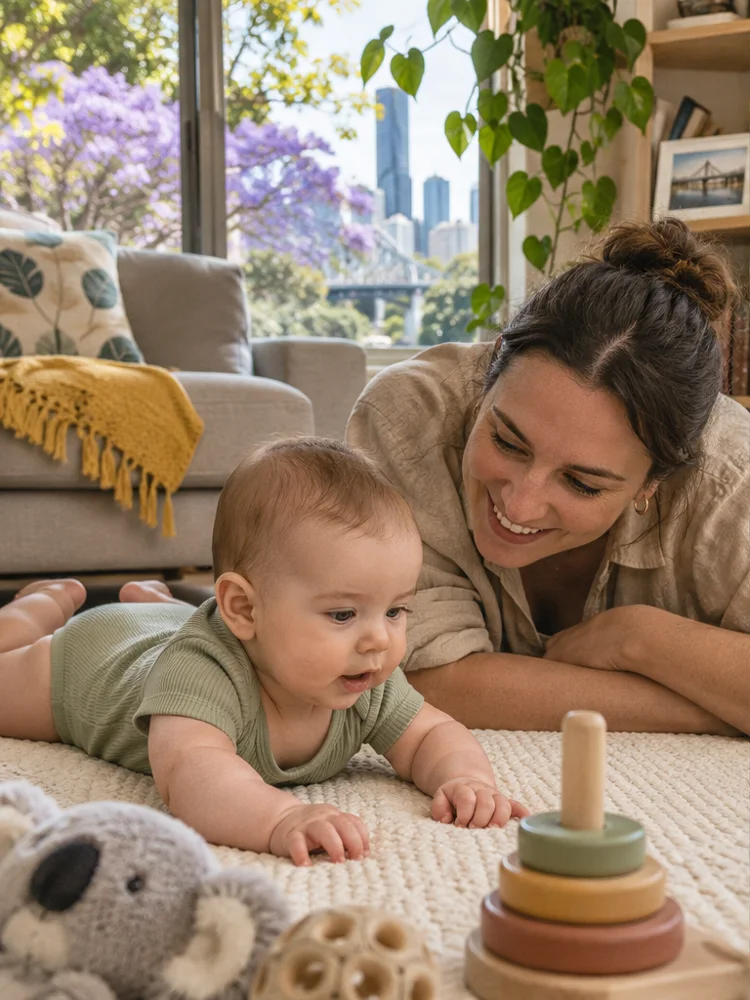
When floor time feels difficult
Perhaps your baby lifts their head briefly, then settles with the same cheek on the mat. Or they can sit when placed but find it hard to get there by themselves. These are useful details to bring to a visit.
What you can ask about
Michelle sees babies for head tilt (torticollis), head flattening, and difficulties with rolling, crawling, standing or walking. Tell her which positions your baby enjoys and which ones prompt fussing. A home visit gives you room to show her exactly what happens.
Explore baby movement
Finding the tricky part of a skill
Riding a bike involves several different jobs. Your child might pedal comfortably once moving, yet struggle to push off or put a foot down to stop. At the playground, it might be stepping off a platform or landing after a hop.
Michelle supports children with frequent falls, motor planning difficulties and developmental coordination disorder. Tell her which part your child avoids and what they would most like to join in with.
Explore balance and bike skillsFeet, hips and growing legs
You might notice toe walking in bare feet, feet turning in or out, or a child stopping halfway through their favourite game because their heel or knee hurts. Describe when it happens, whether one side looks different and how it affects a normal day.
When you already have a diagnosis
Michelle’s orthopaedic work includes developmental hip dysplasia, talipes, Sever’s disease and Osgood-Schlatter disease. If a clinician has given you a diagnosis or instructions, mention these when arranging the visit so you can discuss how physiotherapy fits with your child’s care.
Goals that belong to your child
For one child, it might be getting from the floor to the couch. For another, it might be joining a game with siblings. A concrete goal helps you explain what movement support would mean to your family.
Michelle works with children with cerebral palsy, low muscle tone, muscular dystrophies and hypermobility. She also supports movement goals for neurodivergent children and children with genetic conditions including Down, Angelman and Rett syndromes.
If you use a self-managed or plan-managed NDIS plan, ask about session length and travel for your suburb.
Read the NDIS family guideWhere would your child feel comfortable?
Ask about a visit at home or in a local park. Michelle brings games and equipment.
Plan a first visit